
Please use a modern browser for the best experience on our website.
Seriously, things are going to look all messed up otherwise.
Also, you will not be able to log into your account unless you use another browser.
Here are some suggestions:
Chrome | Firefox | Opera | Edge
The Invisible Assistant: AI in Our Lives
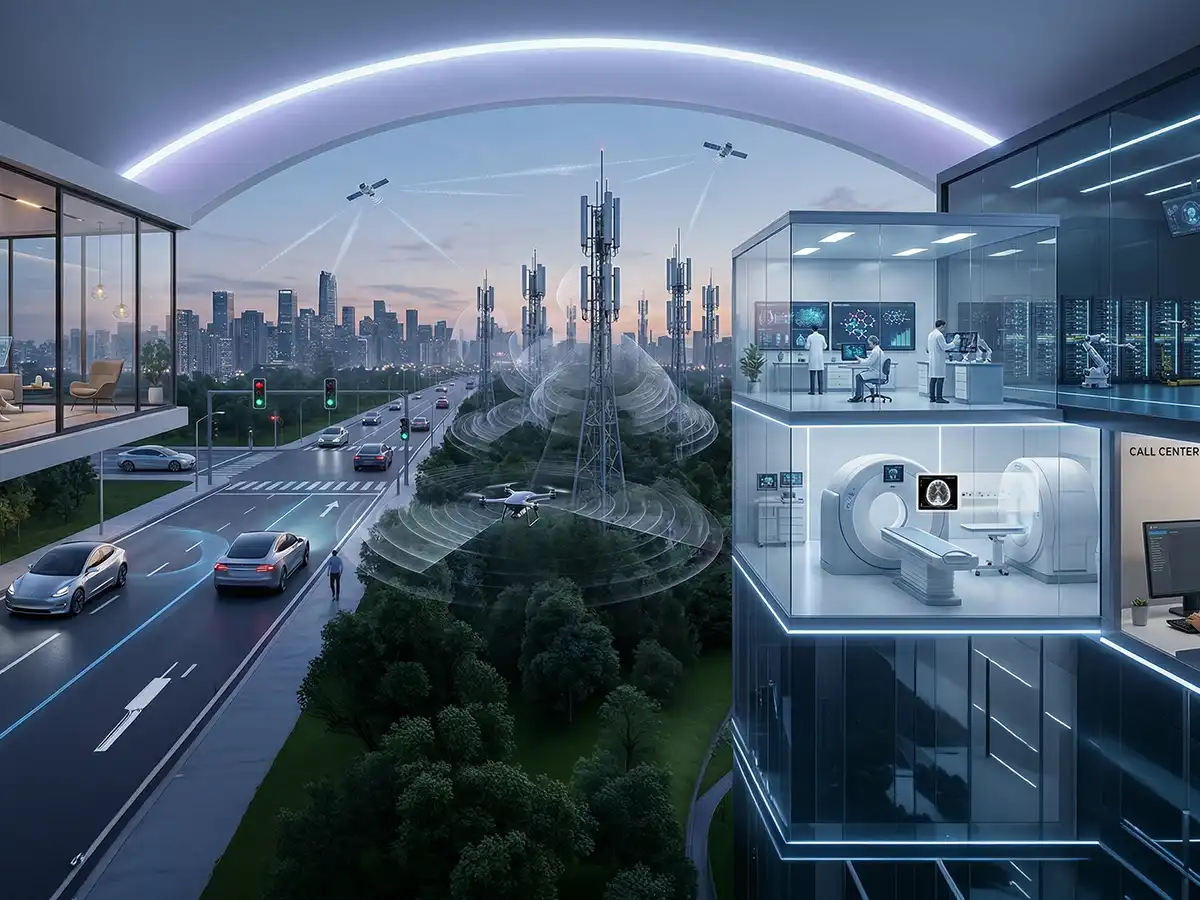
I have become very interested in AI and the many ways that in the near term we will see more use of it. In the below article I asked an AI product available on line to write about different topics. I wrote none of this, AI did it all for me. So have a look and think about what our grandchildren will need to look at for educations & employment. It certainly will not be about anything we have ever done. AI NOW:
In 2026, the greatest trick AI ever pulled was becoming invisible.
Smart Homes: Your home now uses Predictive Presence to adjust lighting and temperature based on your stress levels and gait.
Cognitive Routing: Traffic lights and autonomous cars now use V2X (Vehicle-to-Everything) communication to eliminate stop-and-go traffic in major cities.
Work Co-Pilots: AI agents now handle the “busy work”—summarizing meetings, assigning action items, and managing your calendar—so you can focus on creativity.
The Rise of the “Thinking” Rack: AI in Hardware
The network is getting a brain. Major players like NVIDIA, SK Telecom, and Nokia recently announced a massive expansion of the AI-RAN Alliance.
We are moving away from “dumb” routers to AI-Native Infrastructure:
NPU-Powered Switches: New hardware now includes Neural Processing Units (NPUs) that reroute traffic in microseconds to prevent bottlenecks before they happen.
Self-Healing Grids: Hardware can now predict its own failure. AI-driven sensors can detect a failing cooling fan 48 hours before it stops, shifting workloads to other nodes automatically.
The “Dark NOC”: The goal for late 2026 is the “Dark Network Operations Center”—a system that manages, secures, and heals itself without human intervention.
Jargon Buster
Latency: The “reaction time” of the network. 6G aims for sub-millisecond latency—faster than the human brain can perceive.
NTN (Non-Terrestrial Networks): A system where your phone jumps seamlessly between cell towers and satellites (LEO) to ensure you never have a “dead zone.”
Agentic AI: AI that doesn’t just “chat,” but actually does. It can execute multi-step workflows, like provisioning a network slice or managing a security breach, autonomously.
6G Update: Why 2026 is the “Year of Reality”
For years, 6G was the stuff of science fiction. But as of March 2026, the global standards body 3GPP has officially “frozen” Release 19 and pivoted its full focus to Release 20—the first formal blueprint for 6G.
We aren’t just talking about speed anymore. 6G is being built as the first AI-native generation of connectivity.
Beyond the Terabit: While 5G was about video, 6G aims for 1 Tbps to support real-time holographic communication and “Digital Twin” cities.
The “Sensing” Network: 6G towers won’t just carry data; they will act like radar, “sensing” the movement of drones and people without needing cameras.
The Bottom Line: Don’t trade in your phone yet. Commercial 6G is slated for 2030, but the infrastructure being built today (5G-Advanced) is the bridge that gets us there.
Drug Discovery: Shrinking Years into Months
The “AI power shift” in 2026 is most visible in the lab. AI is no longer just predicting protein structures; it is designing entirely new molecules.
Generative Chemistry: Researchers are using generative AI to screen millions of potential compounds digitally. For example, teams have recently narrowed down 15 million potential molecules to just 60 viable lab candidates in a matter of weeks.
Simulation vs. Animal Testing: High-fidelity AI simulations are increasingly being used to predict drug safety, helping to reduce the industry’s reliance on animal models and speeding up the “target-to-candidate” timeline by nearly 40%.
Imaging & Diagnostics: The “Edge AI” Revolution
Radiology has been transformed by Edge AI, where the intelligence lives directly on the scanner hardware rather than in the cloud.
Instant Triage: Modern MRI and CT scanners automatically flag life-threatening findings (like a stroke or a burst vessel) the second the scan is captured, moving those images to the top of a radiologist’s pile instantly.
Low-Dose Imaging: AI “reconstruction” allows for high-quality images with 50% less radiation or contrast dye. The AI “fills in the gaps” of a faster, lower-intensity scan to produce a crystal-clear diagnostic image.
The “Agentic” Shift: From Chatbots to Action-Bots
The biggest trend of 2026 is Agentic AI. Unlike the old chatbots that just answered questions, these AI agents have the authority to actually do things.
End-to-End Resolution: An AI agent doesn’t just tell you your flight is delayed; it can autonomously check your calendar, find a new flight, rebook it, and send the new boarding pass to your phone—all in one interaction.
Multi-Step Workflows: If a customer reports a defective product, the AI can simultaneously validate the claim, trigger a replacement order in the ERP, and update the CRM without any human intervention.
The “Warm Handoff”: When a case gets too complex, the AI doesn’t just “transfer” the call. It provides the human agent with a 3-second summary of the entire interaction so the customer never has to repeat themselves.
Real-Time “Copilots” for Human Agents
Human agents are no longer alone on a call. They are supported by a live AI “Copilot” that acts as a digital sidekick.
Sentiment Coaching: While the agent is talking, the AI analyzes the caller’s tone, volume, and pace. If it detects rising frustration, a prompt flashes on the agent’s screen: “Customer is becoming agitated. Suggest a 10% loyalty discount to de-escalate.”
Live Knowledge Retrieval: Instead of the agent searching through manual PDFs, the AI listens to the conversation and automatically pulls up the exact policy or technical diagram the agent needs in real-time.
Automated After-Call Work (ACW): In 2026, agents almost never write their own call notes. The AI generates a perfect summary of the issue, the resolution, and the next steps the moment the call ends.
Predictive Analytics & Quality Management
Call center managers have moved from “monitoring 2% of calls” to “analyzing 100% of interactions.”
Predictive CSAT: AI can now predict a Customer Satisfaction (CSAT) score for every single call based on the transcript and sentiment, eliminating the need for those “Please stay on the line for a brief survey” request that customers hate.
Churn Prediction: By analyzing patterns across thousands of calls, AI can flag a customer as a “high churn risk” during a routine support call, allowing the agent to offer a proactive retention incentive.
Voice Biometrics: To kill the “What was your mother’s maiden name?” security questions, 2026 centers use voice biometrics to verify identity based on the caller’s unique vocal print within the first 5 seconds of speaking.
Quick Bytes: March 2026 Round-up
Agentic AI Launch: Orange Business just unveiled Live Intelligence Studio, a platform that allows enterprises to deploy autonomous AI Agents directly onto their secure network.
The 5.5G Bridge: T-Mobile and Ericsson have successfully deployed 5G-Advanced nationwide, offering a “stepping stone” to 6G with integrated satellite-to-phone connectivity.
Energy Breakthrough: New AI-driven “Micro-Sleep” algorithms are helping carriers reduce tower power consumption by 25% during low-traffic hours.
Anti-Drone Services: Orange has debuted Europe’s first “Anti-Drone-as-a-Service,” using 5G sensing to protect critical infrastructure from intrusive low-altitude aircraft.
The 2026 Reality Check: “Trust but Verify”
While the technology is moving fast, 2026 is also a year of Regulatory Reckoning.
FDA & EU Oversight: New guidelines (like the EU AI Act’s high-risk provisions taking effect in August 2026) now require “Credibility Assessment Plans.”
Bias Detection: There is a heavy focus on ensuring AI models don’t have “performance drift” or racial/gender biases, especially in diagnostic tools used for diverse populations.
